
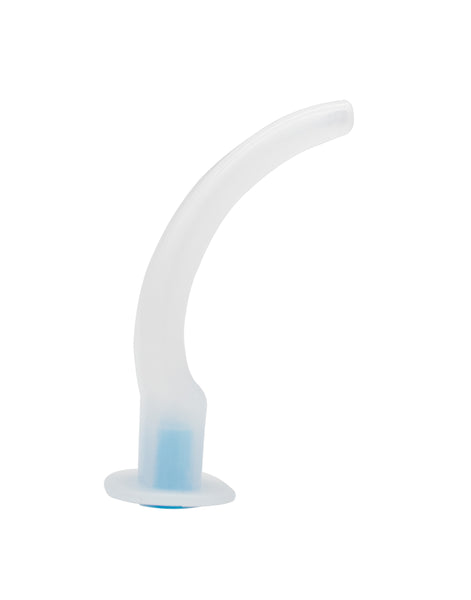
An oral airway, also known as a nasopharyngeal airway or oropharyngeal airway, is a medical device used to maintain an open airway in unconscious or deeply sedated patients. It is a curved, rigid or semi-rigid tube that is inserted through the mouth and into the throat to prevent the tongue from obstructing the airway.
Key Features and Uses:
- Maintains an open airway by preventing the tongue from falling back and obstructing breathing.
- Helps deliver oxygen or ventilation to patients who are unconscious, have impaired gag reflexes, or are unable to maintain their own airway.
- Commonly used in emergency situations, during anesthesia, or for patients with certain medical conditions.
- Available in different sizes to accommodate patients of various ages and anatomies.
- Inserted by trained medical professionals, such as paramedics, nurses, or doctors.
Insertion and Placement:
- Select the appropriate size oral airway based on the patient's anatomy.
- Open the patient's mouth and gently insert the airway, curved side facing up, until it reaches the back of the throat.
- Rotate the airway 180 degrees so the curved side faces down, allowing it to fit comfortably in the patient's mouth.
- Ensure the airway is properly positioned and not obstructing the patient's breathing.
Precautions and Considerations:
- Proper training and technique are essential for safe insertion and use.
- Avoid using an oral airway in patients with a known or suspected gag reflex, as it may induce vomiting.
- Monitor the patient closely for any signs of airway obstruction or complications.
- Proper cleaning and disinfection of the airway device is important to prevent infection.
Oral airways are a critical tool in emergency and medical situations to help maintain an open airway and support breathing in unconscious or sedated patients. Their proper use requires training and careful consideration of the patient's condition and anatomy.
Wishlist
Wishlist is empty.
Wishlist
Compare
Shopping cart
Your cart is empty.
Return to shop
